
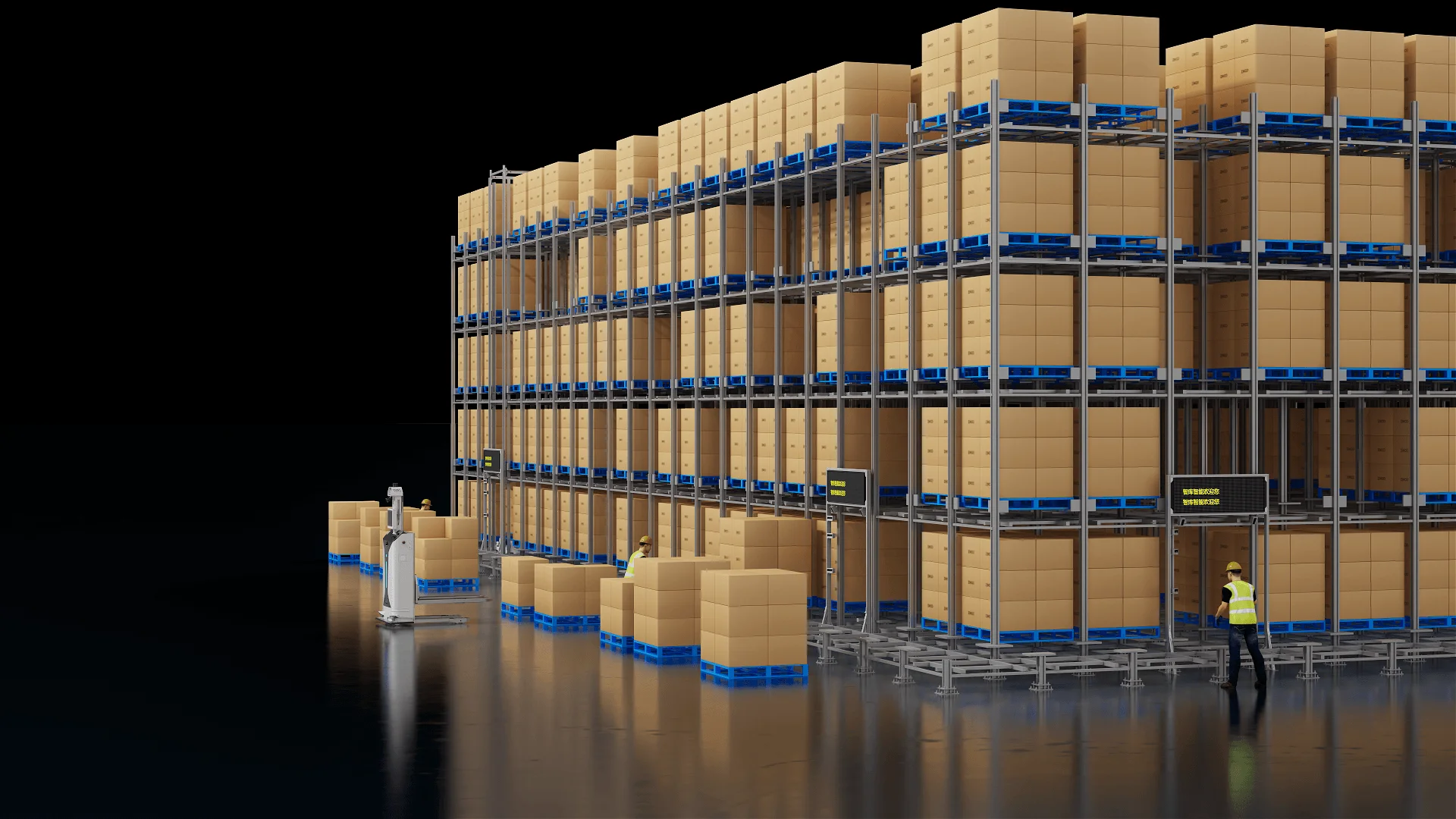
As warehouse operations become increasingly automated and order fulfillment demands continue to rise, businesses are relying more heavily on intelligent control systems to maintain efficiency, accuracy, and operational stability. In high-throughput logistics environments, simply having robots and conveyors is no longer enough — successful automation depends on how well every device works together in real time.
At the center of this coordination is the Warehouse Control System (WCS), the operational intelligence layer that connects software planning with physical warehouse execution.
What Is a Warehouse Control System?
A Warehouse Control System (WCS) is designed to manage and coordinate automated warehouse equipment in real time.
Unlike a Warehouse Management System (WMS), which focuses on inventory management, order processing, and storage strategies, the WCS is responsible for executing operational tasks throughout the warehouse.
The WCS converts warehouse instructions into real-time equipment commands for systems such as:
- Conveyors
- Shuttle robots
- Sortation systems
- Automated Storage and Retrieval Systems (ASRS)
- Elevators and vertical transfer units
- Stacker robots
In simple terms:
- The WMS determines what tasks need to be completed
- The WCS determines how those tasks are executed efficiently
This real-time control capability is essential for maintaining stable operations in highly automated Intelligent Warehouse environments.
How WCS Improves Warehouse Operations
Modern warehouse automation requires precise coordination between multiple systems operating simultaneously. A WCS helps optimize these operations in several key ways.
Improved Throughput Efficiency
Through intelligent task sequencing and dynamic routing, the WCS increases the number of pallets and orders processed per hour without requiring additional equipment investment.
Reduced Operational Errors
Automation minimizes manual intervention and reduces the risk of:
- Picking mistakes
- Routing errors
- Inventory discrepancies
- Shipping inaccuracies
This leads to more stable and reliable warehouse performance.
Better Labor Optimization
By automating repetitive warehouse tasks, businesses can reduce dependence on manual labor and allow employees to focus on higher-value operational activities.
Scalable Automation Architecture
A flexible WCS allows businesses to expand warehouse operations more easily by integrating additional robots, conveyors, or storage systems without disrupting existing workflows.
Real-Time Operational Visibility
Warehouse operators gain full visibility into:
- Equipment status
- Material flow
- Traffic congestion
- Task execution
- Operational bottlenecks
This helps improve decision-making and enables faster response to warehouse exceptions.
WCS vs. WMS: Understanding the Difference
Although WCS and WMS are closely connected, they serve different operational purposes.
| System | Primary Function |
| WMS (Warehouse Management System) | Manages inventory, orders, and warehouse strategies |
| WCS (Warehouse Control System) | Executes and coordinates real-time automation operations |
The WMS focuses on warehouse planning, while the WCS focuses on operational execution.
ZIKOO Robotics integrates both WMS and WCS functionalities within its PTP Smart Warehouse Software platform, creating seamless communication between warehouse planning and automation execution.
WCS as the Core of Intelligent Warehouse Robotics
In modern Automatic 3D warehouse environments, the WCS acts as the central command system that coordinates all automated devices and robotics systems.
Within ZIKOO’s Intelligent Warehouse solution, the WCS manages:
- R-Bot Four-Way Shuttles for Dense Storage retrieval
- H-Bot Vertical Transfer Shuttles for multi-level transportation
- U-Bot Stacker Robots for flexible pallet handling
The system continuously monitors warehouse activity and dynamically adjusts operations to ensure:
- Optimized routing
- Real-time traffic coordination
- Collision avoidance
- Synchronized equipment operation
- Stable high-frequency workflows
This enables highly efficient multi-robot collaboration across complex warehouse environments.
Flexible Integration with Existing Warehouse Systems
Many enterprises already operate existing warehouse software or automation infrastructure. Replacing all systems at once can create unnecessary risk and cost.
To support gradual warehouse modernization, ZIKOO Robotics provides flexible integration capabilities that support:
- Existing ERP systems
- Legacy WMS platforms
- Conveyor systems
- Robotics from multiple manufacturers
- Third-party automation equipment
This approach allows businesses to implement Intelligent Warehouse upgrades step by step while maintaining operational continuity.
Best Practices for Successful WCS Deployment
Implementing a Warehouse Control System successfully requires careful planning and long-term operational strategy.
Important implementation steps include:
- Defining clear warehouse automation objectives
- Evaluating current warehouse workflows
- Assessing infrastructure compatibility
- Selecting experienced automation partners
- Conducting phased deployment and testing
- Training operational teams
- Establishing long-term optimization and support plans
A well-designed implementation strategy helps maximize warehouse performance and long-term return on investment.
Future Trends in Warehouse Control Systems
Warehouse Control Systems are evolving rapidly alongside advances in artificial intelligence, robotics, and industrial IoT technologies.
AI-Driven Warehouse Optimization
AI technologies are enabling smarter warehouse decision-making through:
- Dynamic task optimization
- Intelligent traffic management
- Real-time operational adjustments
- Autonomous workflow balancing
IoT-Based Real-Time Monitoring
Connected sensors and smart devices provide continuous operational data that improves warehouse visibility and control accuracy.
Predictive Maintenance
Modern WCS platforms can analyze equipment performance data to predict failures before downtime occurs, improving warehouse reliability and reducing maintenance costs.
These innovations are accelerating the transition toward fully autonomous and self-optimizing warehouse operations.
How ZIKOO Enhances Intelligent Warehouse Control
ZIKOO Robotics combines advanced WCS technology with intelligent robotics systems to create highly efficient and scalable warehouse automation solutions.
Its PTP Smart Warehouse Software platform supports:
- Real-time equipment orchestration
- Intelligent task scheduling
- Multi-robot fleet coordination
- Dynamic routing optimization
- Data-driven warehouse management
Together with ZIKOO’s Dense Storage technologies and Automatic 3D warehouse solutions, the system helps enterprises achieve:
- Higher warehouse efficiency
- Greater operational flexibility
- Lower long-term operating costs
- Improved warehouse scalability
Conclusion
A Warehouse Control System is far more than a software platform — it is the operational intelligence that powers modern warehouse automation.
By connecting warehouse planning with real-time execution, the WCS ensures that every movement within the warehouse is coordinated, efficient, and optimized.
As warehouse environments become increasingly automated and data-driven, intelligent WCS platforms will continue playing a critical role in enabling faster, smarter, and more scalable logistics operations for the future of Intelligent Warehouse automation.
